

Most homes simply weren’t built with aging bodies in mind — narrow doorways, high cabinets, a tub you have to step over. That mismatch is exactly why aging in place home modifications have become one of the most common renovation categories for families planning ahead, or reacting after a health scare makes the gap suddenly obvious.
The good news: this isn’t an all-or-nothing decision. It’s a category that genuinely runs from a $20 lever door handle to a $60,000 elevator, and the right starting point depends entirely on which room poses the real risk in your specific home.
Table of Contents
Why This Matters More Than It Might Seem
AARP survey data consistently shows a strong majority of older adults want to stay in their current home rather than move to assisted living — cited figures range from 75% to 90% depending on the specific survey and age group. Despite that clear preference, only about 18% of adults 50 and older have actually made the modifications that would let them do it safely.
The financial case is just as stark as the emotional one. Assisted living runs a national median of roughly $45,000-$64,000 a year, and nursing home care runs $104,000-$117,000 annually, according to industry cost-of-care survey data. A $10,000-$30,000 whole-home modification budget, spread across the highest-priority rooms, often pays for itself in well under a year compared to facility care — before even accounting for the value of staying somewhere familiar.
The Bathroom: Start Here First
This is consistently identified as the single most dangerous room in the house for older adults, and it’s where most aging-in-place budgets should start. Slippery floors are linked to roughly 80% of home falls among seniors, and the combination of a hard tub wall to step over, a low toilet, and wet tile creates the most common fall scenario in the entire home.
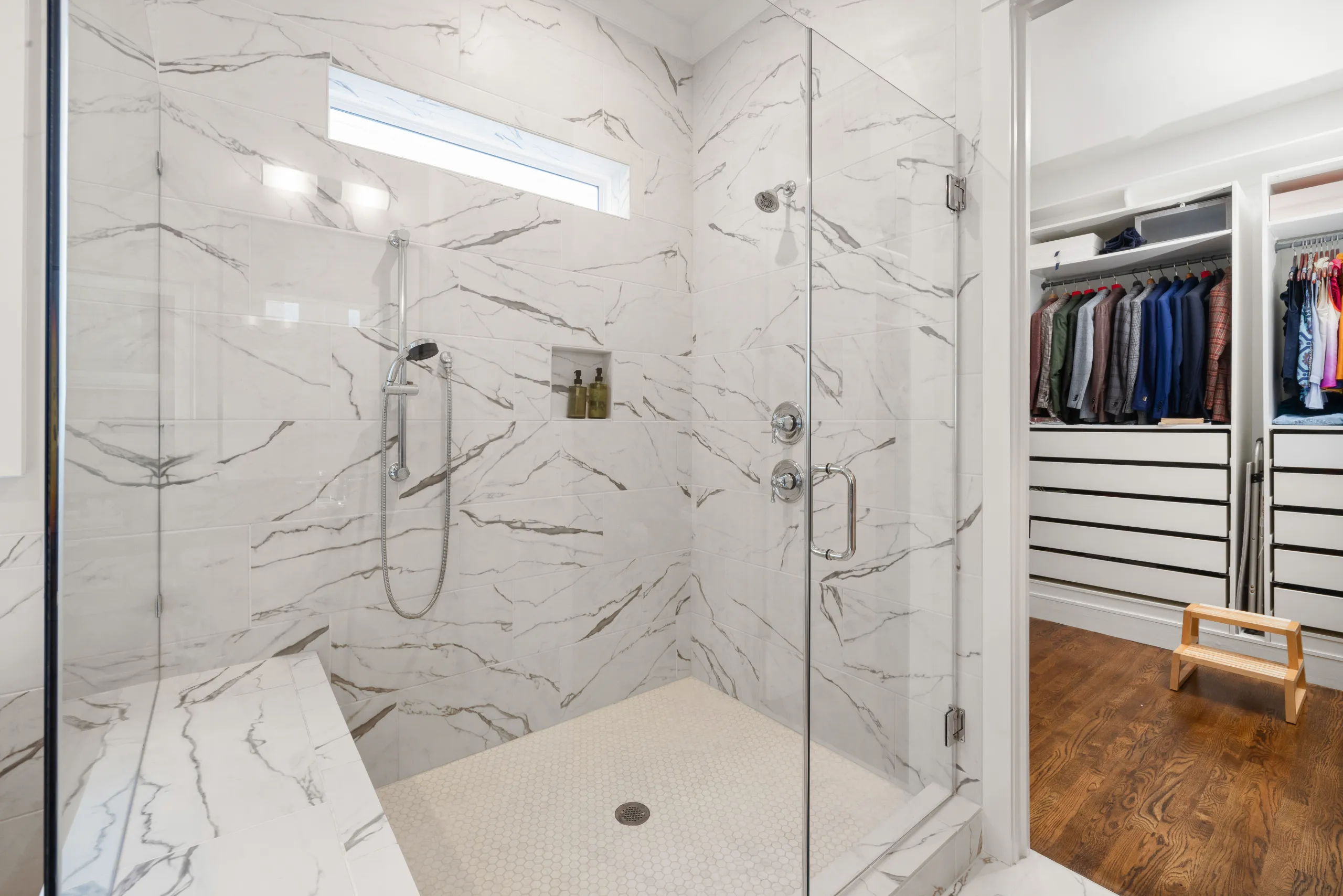
A curbless (zero-threshold) walk-in shower is the single most-requested upgrade in this category, running $6,000-$10,000 installed for a standard conversion, with custom tiled versions reaching $3,500-$15,000. The curbless design — no lip to step over, a flush transition a walker or wheelchair can roll across — adds roughly 20-30% over a standard curbed walk-in shower, since the subfloor has to be recessed and drainage re-engineered. A walk-in tub is the alternative for those who prefer bathing, running $4,000-$18,000.
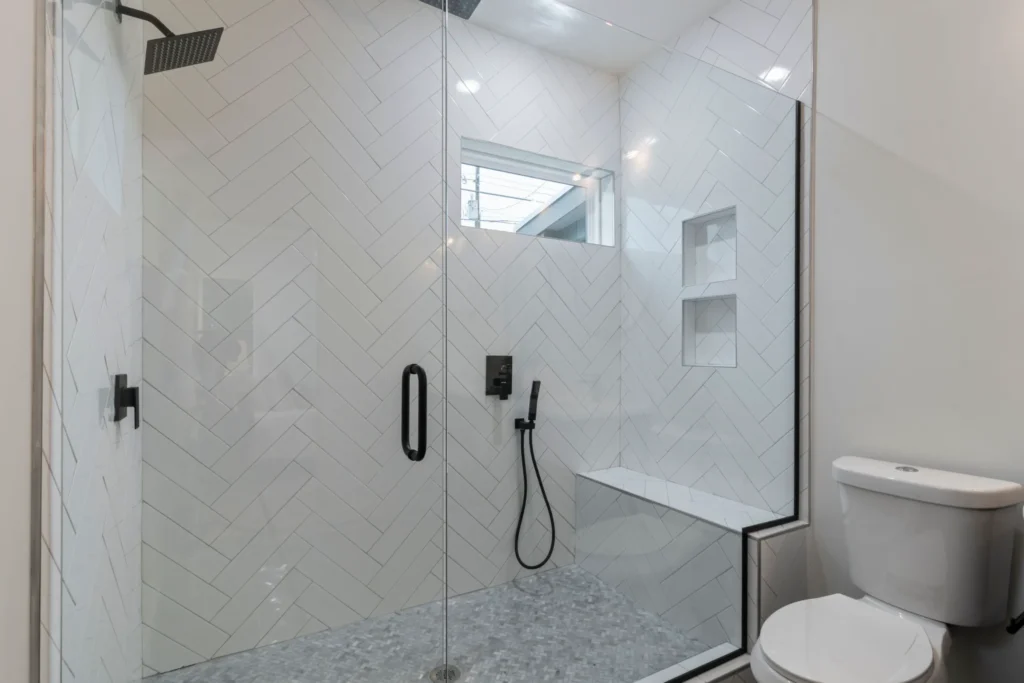
Lower-cost bathroom fixes matter too, and they add up to real risk reduction on their own: grab bars ($50-$200 each, professionally installed), a comfort-height toilet, a handheld showerhead ($30-$150), and non-slip mats. A full accessible bathroom renovation, combining several of these, typically runs $15,000-$30,000, while a more basic version (grab bars, a roll-in shower, taller toilet) can be done for $8,000-$10,000.
The Kitchen: Often Underestimated
Kitchens get less attention in aging-in-place planning than bathrooms, but reaching overhead cabinets, bending to access low shelves, and gripping small round knobs all become genuinely harder with age, and this room is where a lot of daily frustration quietly accumulates.
Pull-out shelving is the single best kitchen upgrade for the money, running $600-$1,500 for a set of six, retrofitting base cabinets with heavy-duty sliding drawers so nothing requires kneeling or reaching into a dark cabinet interior. Pair it with D-pull cabinet hardware ($100-$300 for a full kitchen) — genuinely easier to grip than round knobs for anyone with reduced hand strength. A lowered countertop section ($1,000-$3,000) creates a wheelchair-height, 34-inch work surface that can double as a seated food-prep station. Full kitchen accessibility projects, including all of the above plus accessible appliances, run $10,000-$25,000.
Entryways and Hallways: The Overlooked Connector Spaces
Getting into and moving through a home matters as much as any single room, and this category is often the cheapest to address relative to its safety impact.
A step-free entrance runs $1,000-$4,000 depending on materials and style, while threshold ramps for smaller doorway lips run just $80-$250 for a set of four — a genuinely low-cost fix for a real trip hazard. Continuous hallway handrails run $400-$1,000 per 20 feet, and lever-style door handles, replacing round knobs that require grip strength, cost just $20-$25 each.
Stairs and Mobility: The Biggest Line Items
This is where costs climb the most, and where the right choice depends heavily on the specific home’s layout and the individual’s mobility needs.
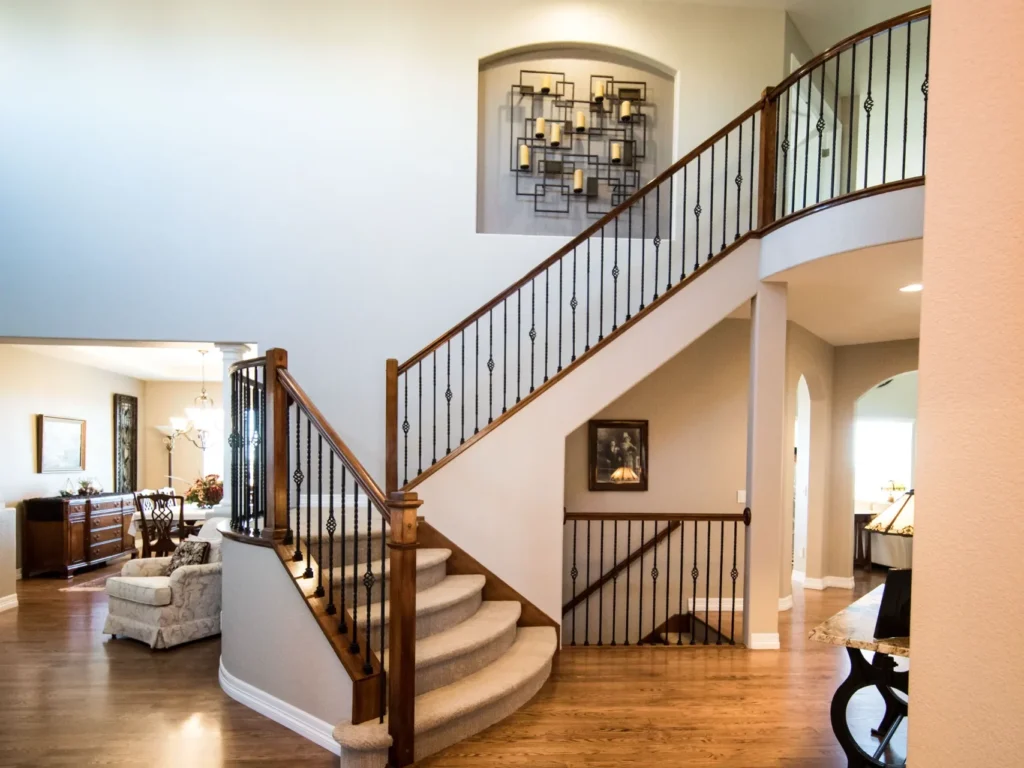
A straight stair lift runs $2,200-$8,500; a curved stair lift, needed for staircases with a landing or turn, runs $7,500-$15,000 or more. A residential elevator, the most expensive single item in this entire category, runs $30,000-$60,000+, since it typically requires a full wall-to-ceiling structural modification rather than simply adding equipment to an existing staircase. For many single-story-capable households, converting a room to a first-floor bedroom ($5,000-$15,000) avoids the stair problem entirely and is often more cost-effective than a lift or elevator if the home’s layout allows it.
Comparison Table: Room-by-Room Cost Ranges
| Room/Category | Low-Cost Option | Full Renovation Range | Priority |
|---|---|---|---|
| Bathroom | Grab bars, handheld showerhead ($50–$300) | $8,000–$30,000 (curbless shower, walk-in tub) | Highest, most fall risk |
| Kitchen | D-pull hardware, pull-out shelving ($100–$1,500) | $10,000–$25,000 (full accessibility) | High, daily frustration point |
| Entryways/Hallways | Threshold ramps, lever handles ($20–$250) | $1,000–$4,000 (step-free entrance) | High, cheap, high-impact |
| Stairs/Mobility | Handrails ($400–$1,000/20ft) | $2,200–$60,000+ (stair lift to elevator) | Medium, depends on layout |
| Bedroom | Better lighting ($100–$500) | $5,000–$15,000 (first-floor conversion) | Medium, avoids stairs entirely |
| Lighting (whole home) | Motion-sensor nightlights, LED bulbs ($100–$500) | $1,000+ (rewired hallway switches) | Medium, low cost, broad benefit |
This table reflects 2026 national average cost data compiled across multiple contractor and industry sources; actual costs vary by region, home age, and contractor.
Funding Options Most Families Don’t Know About
Out-of-pocket isn’t the only path. VA Specially Adapted Housing grants provide roughly $110,000 (figures adjust annually) for qualifying veterans with service-connected disabilities, with a separate, smaller Special Housing Adaptation grant also available, contact your regional VA office directly. The USDA Section 504 Home Repair program offers grants up to $10,000 plus low-interest loans up to $40,000 for very-low-income rural homeowners aged 62+.
Many state and local Area Agencies on Aging offer smaller grants, typically $500-$5,000, for grab bars, ramps, and minor bathroom modifications — the Eldercare Locator (1-800-677-1116) connects you to your local program. If a doctor prescribes modifications as medically necessary, costs exceeding 7.5% of adjusted gross income may be deductible under IRS Publication 502. Medicare generally doesn’t cover structural modifications, but can cover a portion of certain prescribed medical equipment, so it’s worth confirming directly with your plan.
A Realistic Way to Prioritize
If budget forces you to phase this rather than do it all at once, the room-by-room risk data points toward a fairly clear order: bathroom safety first, since it addresses the highest fall risk for the broadest range of situations. Entryway and hallway fixes next, since many are genuinely inexpensive relative to their safety impact. Kitchen modifications after that, addressing daily function rather than acute safety risk. Stairs and mobility equipment last, both because they’re the most expensive category and because the right solution (lift, elevator, or first-floor conversion) depends heavily on decisions about the other rooms first.
Working with a Certified Aging-in-Place Specialist (CAPS), a real credential contractors can earn through the National Association of Home Builders, is worth considering for anything beyond the smallest fixes, since they’re specifically trained in code compliance and design details a general contractor might miss.
Frequently Asked Questions
The bathroom, consistently. It’s the room most associated with falls among older adults, and even lower-cost fixes like grab bars and a handheld showerhead meaningfully reduce risk before a full renovation is affordable.
The full range spans from under $500 for basic safety items to $50,000+ for major structural changes like an elevator. Whole-home modification budgets commonly land in the $10,000-$30,000 range when phased across the highest-priority rooms.
Yes, several. VA grants (for qualifying veterans), USDA Section 504 grants and loans (for low-income rural homeowners 62+), state Area Agency on Aging grants, and IRS medical expense deductions for prescribed modifications are all real funding paths worth checking before paying entirely out of pocket.
It depends on your home’s layout. A straight stair lift ($2,200-$8,500) is often cheaper than a first-floor bedroom conversion ($5,000-$15,000), but a bedroom conversion eliminates the need for stairs entirely rather than just making them manageable, which may be the better long-term solution depending on mobility trajectory.
Generally no for structural modifications, but it can cover a portion of certain medically necessary equipment, like grab bars, when a doctor prescribes them. It’s worth confirming directly with your specific Medicare plan rather than assuming coverage either way.
For most people, aging in place with modifications is significantly cheaper over time. Assisted living runs a national median of roughly $45,000-$64,000 a year, meaning even a $30,000 whole-home modification budget can cost less than a single year of facility care.
The Bottom Line
Aging-in-place home modifications work best treated as a room-by-room priority list rather than a single, overwhelming renovation. Start with the bathroom, where the real fall risk lives, address entryways and hallways for their low cost-to-impact ratio, then move to the kitchen and finally stairs or mobility equipment, where the most expensive decisions depend on choices you’ve already made elsewhere in the home. Check funding options before assuming the full cost falls on your own budget, and consider a Certified Aging-in-Place Specialist for anything beyond the basics.
SOURCES
- CostToRenovate : “Aging-in-Place Renovation Costs in 2026: What Contractors Actually Charge“
- BuildCalc Pro : “Aging-in-Place Home Modifications — Complete Guide & Costs 2026“
- AARP : “What Are the Costs of Aging in Place?”
- Fixr.com : “Cost of Aging in Place | Remodel for Aging in Place”
- Home at Home : “Understanding the Cost of Aging in Place (and How to Prepare)”
- ElderLife Financial : “How Much Do Home Modifications Cost for Aging in Place?“
DISCLAIMER
PeakGuard Home provides general guidance on home and solar improvement topics based on research and publicly available information. This content is intended for informational purposes only and should not be treated as professional advice. Costs, products, and recommendations may vary based on your location, home, and local codes. Always consult a licensed contractor, electrician, or solar professional before making improvement decisions or starting any project.