

If you’ve opened your utility bill recently and felt genuine sticker shock, you’re far from alone. Electricity rates keep climbing across the country, and homeowners are looking for ways to take back some control without a major renovation.
Among the best smart thermostats 2026 has to offer, the right pick can meaningfully cut your heating and cooling costs historically the largest single share of most utility bills without sacrificing comfort. Here’s an honest comparison of five real options, what they actually cost right now, and what the savings genuinely look like once you get past the marketing.
Table of Contents
Why a Thermostat Upgrade Actually Matters
The core mechanism is simple and well-documented: the U.S. Department of Energy states homeowners can save up to 10% annually on heating and cooling by turning the thermostat back 7-10°F for eight hours a day, typically while at work or asleep.
The problem most people run into is consistency remembering to adjust it every single day, every season, is harder than it sounds. Smart thermostats automate that exact behavior using geofencing (tracking your phone’s location) and occupancy sensors, shifting into an efficient mode automatically rather than relying on you to remember.
The Top 5 Compared
| Model | Verified 2026 Price | Best For | Key Feature |
|---|---|---|---|
| Ecobee Smart Thermostat Premium | $249–$329 | Multi-room homes, Apple users | Included room sensor, native HomeKit support |
| Google Nest Learning Thermostat (4th Gen) | $249–$280 | Hands-off automation | Learns your schedule without manual programming |
| Honeywell Home T9 | $199–$200 | Budget-conscious multi-room coverage | Cheaper room sensors ($40 vs. Ecobee’s $79) |
| Amazon Smart Thermostat | $79 | Tightest budget | Lowest price, often includes free professional install |
| Wyze Thermostat | Under $100 (varies by retailer) | Basic smart features on a budget | Simple scheduling and remote control at entry-level pricing |
This table reflects verified 2026 pricing from multiple independent testing sources; actual prices fluctuate with retailer promotions and utility rebate programs.
Ecobee Smart Thermostat Premium
The Ecobee Premium is the strongest all-around pick for homes with rooms that run hot or cold inconsistently. It ships with one SmartSensor that detects both temperature and occupancy in a second room, and its “Follow Me” feature prioritizes comfort in occupied rooms rather than wherever the thermostat happens to be mounted.
It’s also the only major thermostat with native Apple HomeKit support alongside Alexa and Google Assistant, and it includes a built-in air quality monitor, a genuinely unique feature among the models here, useful for knowing when to change HVAC filters.
Google Nest Learning Thermostat (4th Gen)
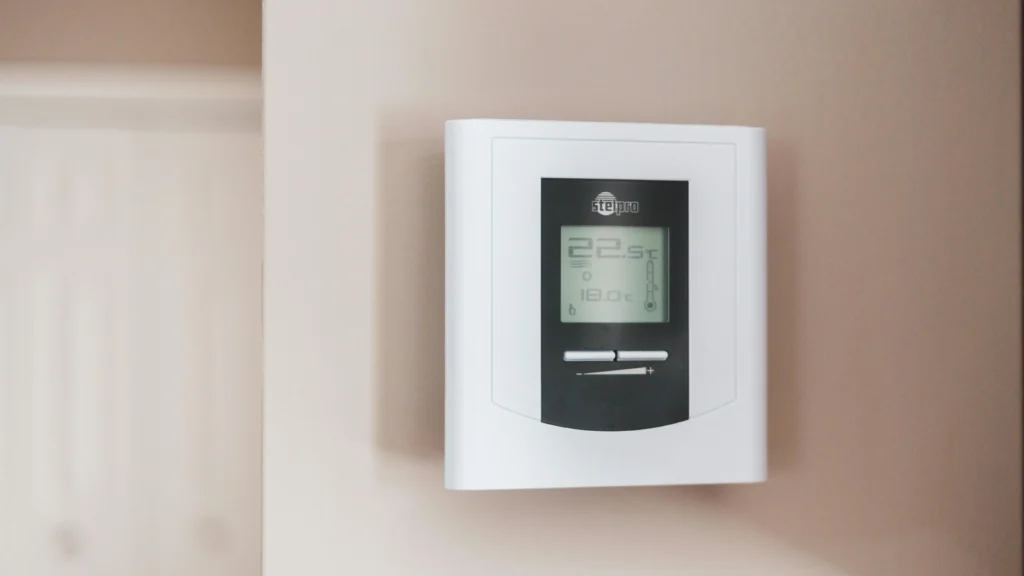
The Nest remains the most recognizable name in this category for a real reason: it learns your schedule automatically over about the first week or two of use, rather than requiring manual programming. For households that want the automation without configuring anything themselves, this is the most hands-off option on this list.
Honeywell Home T9
Honeywell has been in the thermostat business longer than any other name here, and the T9 reflects that experience with strong sensor range and broad HVAC compatibility, including complex multi-stage systems that some newer competitors struggle with. Its room sensors cost $40 each versus Ecobee’s $79, making it the more cost-effective choice for covering three or more rooms, even though it lacks Ecobee’s air quality monitoring and HomeKit support.
Amazon Smart Thermostat
At $79, this is meaningfully cheaper than every other option here, and it includes a C-wire adapter for roughly $15-20 more if your home needs one. Amazon has offered free professional installation in many areas, which is a genuinely unusual benefit at this price point. It lacks the room sensors and advanced features of the pricier models, but for a household on a tight budget, it delivers the core smart-scheduling benefit at a fraction of the cost.
How Much Can You Actually Save?
This is where it’s worth separating marketing claims from independently verified numbers. Ecobee and other manufacturers commonly advertise “up to 26%” savings on heating and cooling. Independent ENERGY STAR estimates are more conservative: $50-145 per year, depending on your home, climate, and previous thermostat habits.
One independent product review measured an actual 18% reduction in energy use compared to a prior basic schedule-based thermostat, based on real utility bill comparisons across matched seasons in a single household. That’s a genuinely strong result, but it’s one data point, not a guaranteed outcome for every home your actual savings depend heavily on how inefficiently your old thermostat setup was being used beforehand.
Rebates Are the Part Most Homeowners Miss
Utility rebates can meaningfully change the real cost of any of these devices, and they vary a lot by region. In California specifically, PG&E offers up to $120 for ENERGY STAR-certified thermostats, Southern California Edison offers $75 plus a $50 program participation bonus, SDG&E offers $85-125, and SMUD offers $100. These are California examples specifically, since utility rebate programs and amounts differ significantly by state and provider checking your own utility’s website before buying is worth the ten minutes it takes.
Matching a Thermostat to Your Existing Smart Home
Price and sensors aside, which ecosystem you’re already invested in is worth weighing before buying, since it affects how well the thermostat integrates with everything else in your home.
If your household already runs on Google Assistant and Google/Nest devices, the Learning Thermostat’s native integration is noticeably tighter than Ecobee’s Google support. If you’re an iPhone household using Apple HomeKit, Ecobee is currently the only thermostat in this comparison with native HomeKit support Nest and Honeywell don’t offer it at all. For Amazon Alexa-centric homes, both Ecobee and the Amazon Smart Thermostat integrate well, with the Amazon option having the most obvious natural fit given the shared ecosystem.
It’s also worth checking HVAC compatibility before buying, especially for less common systems. The Honeywell T9 is frequently recommended by HVAC contractors specifically because it handles multi-stage, commercial-style, and unusual equipment configurations that some newer consumer-focused thermostats aren’t built for. If your home has a heat pump, all of the models compared here support multi-stage heat pump operation, though Ecobee’s auxiliary heat control is generally considered the most refined at preventing unnecessary backup heat strip activation, which can otherwise add meaningfully to a heating bill.
Is Professional Installation Necessary?
For most homes, no. If you’re comfortable with a screwdriver and taking a photo of your existing wiring before disconnecting anything, installation for most of these models takes 30-45 minutes.
The one detail worth checking beforehand is the C-wire (Common Wire), which provides constant low-voltage power to the thermostat. Homes built before the 1990s sometimes lack one. The Ecobee Premium includes a Power Extender Kit, and the Amazon Smart Thermostat offers a compatible adapter, both resolving this without an electrician in the vast majority of cases this affects roughly 5-10% of US homes, according to product documentation from both manufacturers.
Frequently Asked Questions
Yes, though the honest range is $50-145 per year according to independent ENERGY STAR estimates, generally lower than the “up to 26%” figure some manufacturers advertise. Actual savings depend on your climate, home efficiency, and how your previous thermostat was being used
The Honeywell T9 offers the most cost-effective multi-room coverage, since its room sensors cost $40 each compared to Ecobee’s $79, while still providing solid temperature balancing across a larger home.
Not necessarily. Roughly 5-10% of US homes, mostly built before the 1990s, lack a dedicated C-wire. The Ecobee Premium and Amazon Smart Thermostat both include adapters that resolve this without needing an electrician.
Yes, meaningfully in many regions. Rebates commonly range from $50 to $120 depending on your utility and program, though availability and amounts vary significantly by state — checking your specific utility’s rebate portal before buying is worth doing.
Most homeowners can install these themselves in 30-45 minutes with basic tools. Professional installation is worth considering only for unusually complex HVAC systems or if you’re not comfortable working with low-voltage wiring.
Yes. A smart thermostat helps ensure the energy your solar system produces is used efficiently by your HVAC system rather than wasted through inefficient scheduling, complementing rather than competing with a solar setup.
The Bottom Line
The best smart thermostat for 2026 depends more on your specific home and budget than any single “best overall” pick. The Ecobee Premium leads for multi-room homes and Apple users, the Nest wins for pure hands-off automation, the Honeywell T9 offers the strongest room-sensor value, and the Amazon Smart Thermostat covers the core benefit at the lowest realistic price. Whichever you choose, check your utility’s rebate program before buying it’s the easiest way to meaningfully lower the real cost of any of these options.
SOURCES
- U.S. Department of Energy : “Energy Saver: Thermostats”
- ClearFlowGuide : “Nest $280 vs Ecobee $250 vs Honeywell $200 — Saves More 2026?”
- SmartHomeExplorer : “Ecobee Premium Review 2026: Is It Worth It? (4 Tested)”
- The Home Picker : “Ecobee SmartThermostat Premium Review 2026”
- DuloCore : “What Is the Best Smart Thermostat for a Heat Pump in 2026?”
- SafeWise : “Ecobee Smart Thermostat Premium Review“
DISCLAIMER
PeakGuard Home provides general guidance on home and solar improvement topics based on research and publicly available information. This content is intended for informational purposes only and should not be treated as professional advice. Costs, products, and recommendations may vary based on your location, home, and local codes. Always consult a licensed contractor, electrician, or solar professional before making improvement decisions or starting any project.