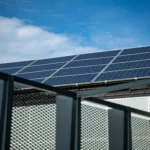


Imagine looking through your living room window knowing every ray of sunlight hitting the glass is quietly generating electricity. That’s the idea behind transparent solar windows glass engineered to let visible light through while capturing the invisible ultraviolet and infrared wavelengths for power.
It’s a genuinely real technology, not science fiction. What it isn’t, at least not yet, is something you can call a contractor and install on your house this year. Here’s the honest state of transparent solar windows in 2026, what’s real, what’s still years away, and why the gap between the two matters if you’re considering it.
Table of Contents
How the Technology Actually Works
Most transparent solar windows rely on something called a Transparent Luminescent Solar Concentrator, or a related quantum dot approach. Tiny materials embedded in or coated onto the glass organic dyes or quantum dots depending on the manufacturer absorb specific non-visible wavelengths of sunlight. That absorbed energy re-emits at a different infrared wavelength and travels to the edges of the glass pane, where thin strips of conventional photovoltaic cells convert it into usable electricity.
The genuinely clever part is that this happens without noticeably tinting the glass or blocking your view, unlike older attempts at “solar glass” that simply used very thin, partially see-through versions of standard opaque solar cells.

What’s Actually Available Right Now
This is the part where the honest answer diverges sharply from a lot of enthusiastic coverage of this technology: as of 2026, no major manufacturer sells a transparent solar window product directly to homeowners.
SolarWindow Technologies, one of the most visible names in this space, states directly that it has no products yet available to the general public its current work focuses on commercial and architectural retrofit applications, plus partnerships across industries like automotive and marine. Ubiquitous Energy, an MIT spinoff and probably the most consumer-recognizable name in transparent solar, announced a partnership with Andersen Corporation (a major window manufacturer) back in 2022 to eventually bring this technology to residential windows and doors. As of 2026, that product is still described as scaling up rather than commercially available.
The most concrete real-world example is Physee’s PowerWindow installation genuinely impressive, but it’s a roughly 300 square foot installation in a single Dutch bank building, not a residential product you can purchase. Onyx Solar, based in Spain, has real installed photovoltaic glass in commercial buildings across Europe and North America, but again, this is architectural and commercial glazing, not a residential window replacement product.

The Efficiency Reality
Even setting aside availability, it’s worth understanding the performance gap, since it affects how much this technology could realistically contribute to a home’s energy needs once it does become available.
Ubiquitous Energy’s ClearView Power technology has reached 9.8% efficiency while maintaining full transparency genuinely impressive for a technology that lets light pass through at all. UbiQD’s quantum dot-based approach runs closer to 5% efficiency at about 50% transparency, translating to roughly 50 watts per square meter in direct sunlight, according to the company’s own CEO.
Compare that to conventional rooftop solar: current high-efficiency TOPCon panels reach up to 24% efficiency, meaning even the best transparent solar technology available today produces less than half the electricity per square foot of a standard rooftop system. That’s not a flaw in the technology physics genuinely limits how much energy you can extract from a surface while also letting most of the visible light pass through it but it does mean transparent solar windows were never going to replace rooftop panels as your home’s primary power source, even once commercially available.
Why the Technology Still Matters, Even Pre-Commercial
None of this means transparent solar windows are a dead end. Office towers and high-rise buildings have far more vertical glass surface area than roof area, which is exactly why this technology is gaining real traction in commercial construction first. A glass facade that offsets even a modest percentage of a building’s energy load, without changing its appearance, is a genuinely useful tool for large commercial developers, and that’s where the real, verified installations exist today.
For homes specifically, the appeal remains real for a few groups once the technology reaches residential availability: apartment dwellers and renters who can’t install rooftop panels, homeowners with historical properties where visible solar panels aren’t permitted, and homes with limited roof space relative to window area.
Comparison Table: Transparent Solar vs. Conventional Rooftop Solar
| Factor | Transparent Solar Windows | Conventional Rooftop Panels |
|---|---|---|
| Residential Availability (2026) | Not yet commercially available | Widely available and installed |
| Efficiency | 5%–9.8% (leading technologies) | Up to 24% (TOPCon) |
| Visual Impact | Minimal to none (looks like standard glass) | Visible, opaque panels |
| Best Current Application | Commercial buildings, architectural glazing | Residential and commercial rooftops |
| Verified Real-World Installations | Limited (e.g., ~300 sq ft commercial installation) | Millions of homes nationwide |
This table reflects the genuinely verified state of the technology as of 2026; availability and efficiency figures will likely change as the technology matures.
What This Means If You’re Planning Window Replacement Now
If you’re already planning to replace windows for other reasons energy efficiency, storm damage, or a renovation it’s worth knowing that waiting for transparent solar specifically isn’t a realistic reason to delay. Current high-performance windows, including triple-pane and Low-E glass options, already provide substantial energy efficiency benefits today, with well-documented costs and installers available nationwide.
Since transparent solar windows don’t yet have a confirmed residential launch timeline, treating your current window decision as separate from this emerging technology is the more financially sound approach. If and when a genuine residential product does reach the market, it will likely first appear as a premium option layered onto standard high-performance glazing, meaning today’s efficient window choice isn’t wasted money even if transparent solar eventually becomes available.

What Would Need to Happen for This to Reach Homes
A few concrete things need to happen before this becomes a real option for typical homeowners. Manufacturing partnerships like Ubiquitous Energy’s with Andersen Windows need to move from “scaling up” to an actual retail product with real installation networks. Efficiency needs to keep climbing from the current 5-10% range to make the economics genuinely competitive with rooftop panels for the same investment. And pricing, which no verified source could confirm for a residential product since none currently exists to price, would need to reach a level comparable to premium window upgrades rather than a speculative estimate.

None of this is unrealistic the underlying science is real and the commercial building applications prove the core technology works. It’s simply not accurate to describe it as a practical purchase decision for a homeowner in 2026.
Frequently Asked Questions
No, not as a general consumer in 2026. No major manufacturer currently sells a residential transparent solar window product to the public. The closest residential-facing effort, Ubiquitous Energy’s partnership with Andersen Windows, remains in a pre-commercial scaling phase.
Leading transparent solar technologies currently reach 5-9.8% efficiency, compared to up to 24% for high-efficiency conventional rooftop panels. Transparency and energy capture are a direct physical tradeoff, so transparent solar will likely always trail opaque panels in raw efficiency.
They’re genuinely real and already installed in commercial applications. Physee’s PowerWindow and Onyx Solar’s architectural glass are real, verified installations. What doesn’t yet exist is a residential product available for homeowners to purchase.
There’s no confirmed public timeline. Ubiquitous Energy’s residential partnership has been described as “scaling up” for several years without a confirmed consumer launch date, so any specific timeline would be speculation rather than a verified fact.
Some transparent solar technologies do provide genuine thermal benefits by filtering infrared heat, similar to how Low-E glass works, in addition to their electricity generation. This insulating benefit is separate from and doesn’t depend on the electricity-generating component actually being commercially available yet.
For most homeowners, no. Rooftop solar is a mature, widely available, well-understood technology today, while transparent solar windows remain pre-commercial for residential use with no confirmed availability date. If your goal is reducing your electricity bill now, rooftop solar (or another current option) is the realistic path; transparent windows are worth watching for the future, not waiting on for a current decision.
The Bottom Line
Transparent solar windows are a real, scientifically sound technology with genuine commercial building installations already proving the concept works. What they are not, despite some enthusiastic coverage suggesting otherwise, is a practical purchase option for homeowners in 2026 no major manufacturer currently sells a residential product to the public. If you’re planning current energy upgrades, treat this as a technology worth watching rather than budgeting for, and revisit it as manufacturers move from pilot partnerships toward an actual consumer product.
SOURCES
- SolarWindow Technologies : Official company site — https://www.solarwindow.com/
- A1 SolarStore : “Are Transparent Solar Panels the Breakthrough We’ve Been Waiting For?”
- GreenLancer : “Transparent Solar Panels: The Future of Clean Energy?“
- Solar Magazine : “Transparent Solar Panels: Reforming Future Energy Supply”
- UbiQD : “Transparent Solar Panels Will Soon Become a Window of Energy and Light in Your Home“
- Perch Energy : “Transparent Solar Panels As Windows? The Latest Breakthrough”
DISCLAIMER
PeakGuard Home provides general guidance on home and solar improvement topics based on research and publicly available information. This content is intended for informational purposes only and should not be treated as professional advice. Costs, products, and recommendations may vary based on your location, home, and local codes. Always consult a licensed contractor, electrician, or solar professional before making improvement decisions or starting any project.