
DIY vs. Pro Solar Maintenance: Solar panels are built to last 25 years or more, and it’s tempting to treat them as a true “install it and forget it” purchase. That assumption is exactly what causes problems both with lost energy production and, more expensively, with warranty claims that get denied over an honest mistake.
Understanding what voids a solar panel warranty starts with knowing that “the warranty” isn’t actually one document. It’s three separate, differently-timed protections, and knowing which one covers what determines whether a repair is free or comes entirely out of your pocket.
Table of Contents
Your Solar Warranty Is Actually Three Warranties
The product warranty covers physical defects in the panel itself things like cell delamination, a cracked junction box, or frame corrosion caused by manufacturing issues. In 2026, the industry standard for premium residential panels has shifted to 25 years, a real jump from the 10-12 years that was typical through the 2010s.
The performance warranty guarantees a minimum power output over time, accounting for the normal, gradual degradation every solar panel experiences. Standard terms allow roughly 2% output loss in the first year and about 0.5% annually after that, guaranteeing 84-87% of original output at year 25. Premium panels now push further, some guaranteeing as much as 92% retention at that same 25-year mark, a gap that sounds small on paper but adds up to real money. On a system generating $1,800 a year in offset electricity, the difference between a panel degrading at 0.25% versus 0.5% annually works out to roughly $125 a year, every year, for the life of the system.
The workmanship warranty comes from your installer, not the manufacturer, and covers installation-related issues wiring, mounting hardware, roof penetrations. This is the shortest and least consistent of the three, typically running just 1-10 years, and it’s only as good as your installer’s continued existence. This matters more than it sounds: according to the Solar Energy Industries Association, installation defects account for roughly 30% of residential solar system failures within the first decade meaning the shortest, least durable warranty layer is responsible for a genuinely significant share of real-world problems.
DIY Maintenance: What’s Actually Safe
Given what these warranties cover, the safest DIY task is simple exterior cleaning a garden hose rinse from the ground, with plain water and a soft cloth or squeegee, done in the early morning when panels are cool. This kind of light maintenance doesn’t touch anything a product or performance warranty covers, and it’s specifically the kind of task manufacturers expect owners to do themselves.
What isn’t safe, both physically and for your warranty: pressure washers (the force can break the seals protecting electrical components), harsh chemicals or abrasive scrubbers (these can permanently scratch the glass, and using them can be classified as “misuse” that voids coverage), and climbing onto a roof that’s steep, wet, or otherwise risky, since a fall is a genuinely serious outcome and not worth the money saved over hiring someone.
Professional Servicing: When It’s Actually Necessary
Some problems are invisible without the right tools, and this is where a professional genuinely earns their fee rather than just being a safer version of DIY.
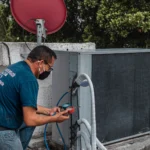
A sudden, unexplained drop in energy production is the clearest signal to call someone. Technicians use thermal imaging cameras to detect “hot spots” cells that are failing and running dangerously hot which are completely invisible to the naked eye but show up clearly on thermal equipment. This isn’t something a visual inspection from the ground can catch, regardless of how carefully you look.
Professional inspection is also genuinely necessary after major weather events. Hail, high winds, or a nearby lightning strike can cause micro-cracks that let moisture into the panel over time, even when the panel looks completely fine from the ground. Most experts recommend a professional inspection every three to five years as routine maintenance, separate from any storm-related check.
The Mistakes That Actually Void Coverage
This is the part with real financial consequences, and it’s worth being specific rather than vague about it.
Using an uncertified installer or handyman for repairs. Most manufacturers require that only licensed electricians or certified solar installers touch the system for any repair or modification. If a general handyman damages a wire while fixing an unrelated leak, the manufacturer will typically deny any future related claim.
Adding unapproved attachments. Bird guards, snow-removal tools, or anything requiring new drilling into the panel frame will commonly void the product warranty, since it’s considered an unauthorized modification to the physical equipment.
Improper cleaning methods. As covered above, pressure washers and harsh chemicals aren’t just physically risky, they’re specifically classified as misuse in most manufacturer warranty language.
Missing documentation. If a panel fails and you need to file a claim, manufacturers commonly ask for proof the system was maintained appropriately. Keeping receipts and a simple log of cleanings and professional inspections is the difference between a smooth claim and a denied one.
Assuming your solar warranty covers storm damage. This is a common and costly misunderstanding. Manufacturer product and performance warranties consistently exclude damage from lightning, hail beyond rated tolerance, vandalism, and extreme weather generally. That kind of damage is a homeowners insurance claim, not a solar warranty claim, it’s worth confirming with your insurer that your policy’s coverage limit accounts for full solar system replacement cost, since this is often overlooked at the time of installation.
Comparison Table: Warranty Types at a Glance
| Warranty Type | Who Provides It | Typical Length (2026) | What It Covers |
|---|---|---|---|
| Product Warranty | Manufacturer | 25 years (premium panels) | Physical defects: cracked glass, delamination, frame corrosion |
| Performance Warranty | Manufacturer | 25–30 years | Guaranteed minimum output, typically 84-87% at year 25 |
| Workmanship Warranty | Installer | 1–10 years (varies widely) | Installation issues: wiring, mounting, roof penetrations |
| Homeowners Insurance | Insurance provider | Ongoing policy term | Storm, fire, vandalism damage not covered by solar warranties |
This table reflects 2026 industry-standard terms; always confirm exact figures in your specific system’s documentation, since coverage varies meaningfully by manufacturer and installer.
A Simple Rule for Deciding DIY vs. Professional
If the task is external, visible, and doesn’t involve tools, chemicals, or climbing onto a steep or wet roof, it’s usually safe to do yourself. If it involves anything electrical, anything requiring you to be on the roof itself, or anything following a storm, it’s worth the cost of a professional both for your safety and to keep your warranty documentation clean.
Frequently Asked Questions
Most experts recommend a professional inspection every three to five years as routine maintenance, plus an additional inspection after any major weather event like hail or high winds, even if the panels look undamaged from the ground.
It’s best to avoid it. Chemical cleaners can leave a thin residue that attracts more dirt or slightly blocks sunlight, and using non-approved cleaning products can be classified as misuse under some manufacturer warranties. Plain water and a soft cloth or squeegee are the safer choice.
Usually yes, since solar panels are typically considered a permanent part of the roof. It’s worth calling your insurer directly after installation to confirm your coverage limit is high enough for full replacement cost, since manufacturer warranties specifically exclude storm and disaster damage.
You should contact a professional to install bird guards or “critter guards.” Nests can block airflow, causing the panels to overheat, and bird droppings are acidic, which can damage the surface. More importantly, animals like squirrels might chew the wires, which is a major fire risk that a DIY fix shouldn’t handle.
Using an uncertified installer or handyman for repairs is one of the most common. Most manufacturers require licensed electricians or certified solar installers for any repair, and unauthorized work can void the product warranty even if the original defect was unrelated.
Typically just 1-10 years, dramatically shorter than the 25-30 year manufacturer warranties, and it depends entirely on your installer remaining in business. This is worth asking about directly when comparing installer quotes, not just assuming it matches the panel warranty.
The Bottom Line
Solar maintenance comes down to a fairly clear split: exterior cleaning and visual monitoring are safe and reasonable to handle yourself, while anything electrical, anything requiring roof access, or anything following a storm is worth a certified professional’s time. Understanding which of your three separate warranties covers what and keeping simple documentation of your maintenance is what actually protects your investment over the system’s 25-plus year life, more than any single cleaning technique ever will.
SOURCES
- GreenLancer : “Best Solar Panel Warranty Guide for Installers for 2026”
- SolarEnergySimplified : “Solar Panel Warranties Explained: What’s Covered in 2026”
- SolarInfoPath : “What Does a Solar Warranty Cover? 2026 Guide & Gaps”
- JouleIO : “Solar Panel Warranties: What They Cover & How Long They Last (2026)”
- SolarReviews : “The Ultimate Guide To Solar Panel Warranties“
- Infinity Solar : “Solar Panel Warranties Explained: What’s Really Covered for 25 Years?”
DISCLAIMER
PeakGuard Home provides general guidance on home and solar improvement topics based on research and publicly available information. This content is intended for informational purposes only and should not be treated as professional advice. Costs, products, and recommendations may vary based on your location, home, and local codes. Always consult a licensed contractor, electrician, or solar professional before making improvement decisions or starting any project.