
We’ve all been there driving through the neighborhood, glancing at roofs, and suddenly noticing your own looks a little tired. Maybe you found granules collecting in the gutter, or last summer’s storm left you wondering how much longer your roof has left in it.
Once you start thinking seriously about a roof replacement, the question comes up fast: metal vs asphalt shingles? It’s a genuinely consequential decision your roof protects everything you own and the right answer depends more on your specific situation than most articles admit.
Here’s what the real numbers say, without the sales pitch either direction.
Table of Contents
Asphalt Shingles: The Familiar, Budget-Friendly Choice
Asphalt shingles dominate American rooftops for good reason. In a 2026 nationwide survey of 1,000 homeowners who’d recently replaced their roofs, 47% chose asphalt, making it by far the most common material.
Think of asphalt shingles like a reliable pair of jeans: affordable, they suit almost any house, and you can find someone to install them in virtually every town in the country. A standard 2,000 sq ft home typically costs $8,000-$15,000 for a full asphalt shingle roof, and installation is fast most crews finish in one to two days.
The tradeoff is lifespan. Asphalt shingles generally last 15-30 years, with basic three-tab shingles at the lower end and architectural (dimensional) shingles reaching the upper end under good conditions. They’re also more vulnerable to algae staining in humid climates and can crack from repeated freeze-thaw cycles in areas with big day-to-night temperature swings.
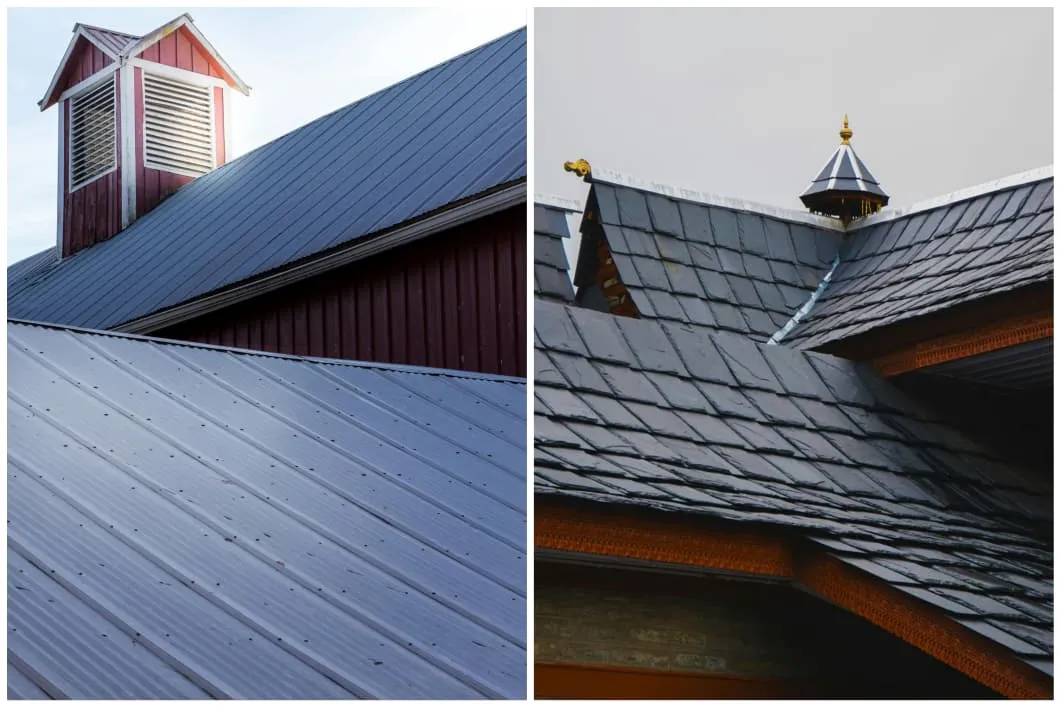
Metal Roofing: The Higher Upfront Cost, Longer Payoff
Metal roofing has shed its old reputation as strictly a barn-and-warehouse material. It’s genuinely common now on everything from custom modern builds to standard suburban homes.
The comparison that actually captures the tradeoff: a metal roof is like a good cast-iron skillet. It costs more at the register, but it’s likely to outlast the house’s current owner. Metal roofs typically last 40-70 years, with some standing seam systems from premium metals rated for up to 100 years. For a standard 2,000 sq ft home, expect to pay roughly $15,000-$30,000 installed, sometimes more for premium standing seam or specialty metal finishes.
Metal also reflects roughly 25-40% more solar radiation than asphalt, which genuinely lowers cooling costs in hot climates though exactly how much you save depends on your specific home, insulation, and local electricity rates, so treat that as a real trend rather than a guaranteed dollar figure.

Head-to-Head Comparison
| Feature | Asphalt Shingles | Metal Roofing |
|---|---|---|
| Average Lifespan | 15–30 years | 40–70 years (some systems up to 100) |
| Typical Cost (2,000 sq ft home) | $8,000–$15,000 | $15,000–$30,000 |
| Installation Speed | Fast (1–2 days) | Slower, specialized labor required |
| Maintenance | Moderate (algae, granule loss) | Very low |
| Resale ROI | ~60–70% of cost | ~60–70% of cost (on a higher base) |
| Fire Resistance | Good (Class A options available) | Excellent |
| Recyclability | Not recyclable, landfill-bound | Fully recyclable |
This table reflects 2026 national average pricing from multiple industry sources; actual costs vary meaningfully by region, roof complexity, and material grade within each category.
The Real Math on Long-Term Cost
Here’s the part that actually matters for a decision, not just a spec sheet comparison.
Imagine Homeowner A saves roughly $10,000 today by choosing asphalt over metal. In 20 years, when that asphalt roof needs replacing, inflation and materials costs mean the second roof likely costs more than the first did plausibly in the same $15,000+ range, meaning Homeowner A pays twice for a service Homeowner B pays for once. Homeowner B spent more upfront on metal but doesn’t think about their roof again for decades.
Whether that math favors metal or asphalt depends almost entirely on how long you plan to stay in the house. If you’re planning to sell within 5-7 years, the higher upfront cost of metal is much harder to justify, since you likely won’t be the one benefiting from its extended lifespan. If this is a long-term or forever home, metal’s math becomes considerably more favorable.
On resale value specifically, the gap is smaller than people assume both materials return roughly 60-70% of their cost at resale. Metal isn’t dramatically better on this specific metric; its advantage is in the decades of avoided replacement cost and maintenance, not necessarily a bigger resale bump.
Which Climate Favors Which Roof
Cold, snowy regions: Metal’s smooth surface sheds snow effectively, which helps prevent ice dams a common and expensive source of gutter and roofline damage in northern climates.
Hot, humid regions: Asphalt shingles can develop dark algae streaking in sustained humidity. Metal stays cleaner and reflects more of the direct sun that makes cooling bills climb in places like Texas or Florida.
High-wind and storm-prone regions: Both materials perform reasonably well, but metal typically carries higher wind ratings, which is part of why it’s become more popular in tornado- and hurricane-prone areas.
What to Actually Buy
For asphalt, architectural (dimensional) shingles from established manufacturers offer meaningfully better durability and curb appeal than basic three-tab shingles, for a moderate cost increase this is usually the better value tier rather than the cheapest option.
For metal, standing seam panel systems use hidden fasteners, which reduces the most common long-term leak point compared to exposed-fastener metal roofing. If budget allows, standing seam is generally the stronger long-term choice within the metal category.
Whichever direction you lean, get quotes from at least three licensed local roofing contractors, and ask each one specifically about performance for your climate and roof design a flat roof, steep roof, or complex roofline can shift both cost and material recommendations meaningfully.
Insurance and Warranty Considerations
One factor that rarely gets mentioned in roofing comparisons: your homeowners insurance. Some insurers offer discounts of 10-30% for metal roofing, particularly in regions prone to hail, wildfire, or high wind, since insurers view metal as a lower future-claim risk. It’s worth calling your insurance provider directly and asking whether a metal roof would change your premium before finalizing your decision, since that discount can meaningfully offset part of the upfront cost gap.
Warranty length also differs meaningfully between the two materials. Asphalt shingle warranties typically run 15-30 years depending on the shingle grade, while metal roofing commonly carries 30-50 year warranties, with some premium systems extending further. Read the fine print on either warranty carefully, since many manufacturer warranties are prorated after the first several years, meaning the payout for a failure late in the warranty period is often much smaller than the full replacement cost.
Making Your Choice
Choosing between metal and asphalt shingles comes down to two honest questions: what’s your budget right now, and how long do you plan to stay in the house? If this is a forever home, metal’s higher upfront cost buys you decades of not thinking about your roof again. If you want a reliable, attractive update without a large upfront investment, asphalt remains a genuinely solid choice, not just a budget compromise. Either way, get three real quotes from licensed local contractors before deciding, and ask them specifically about how each material performs for your roof’s design and your region’s climate.
Frequently Asked Questions
It depends heavily on how long you plan to stay in the home. For homeowners staying 15+ years, metal’s dramatically longer lifespan (40-70 years vs. 15-30) often justifies the higher upfront cost. For those planning to sell within 5-10 years, asphalt’s lower upfront cost is harder to beat.
For a standard 2,000 sq ft home, asphalt typically runs $8,000-$15,000 installed, while metal runs $15,000-$30,000, roughly 1.5 to 2 times more upfront depending on the specific metal and system chosen.
Yes, substantially. Metal roofs typically last 40-70 years, sometimes longer with premium systems, compared to 15-30 years for asphalt shingles.
Not noticeably, when properly installed. Modern metal roofing is installed over solid decking and insulation, and research shows it’s only about 8 decibels louder than asphalt in practice attic space also helps absorb sound.
Metal generally performs better in hot climates, since it reflects 25-40% more solar radiation than asphalt shingles, which can meaningfully reduce cooling costs, though the exact savings vary by home and region.
Not dramatically. Both asphalt and metal roofs return roughly 60-70% of their installation cost at resale. Metal’s real financial advantage is avoiding a second roof replacement over the homeowner’s tenure, not a larger resale premium.
SOURCES
- This Old House : “Shingles vs. Metal Roof Cost (2026 Guide)”
- This Old House : “Metal vs. Asphalt Roofing: What’s the Difference? (2026)”
- NerdWallet : “Metal Roof vs. Asphalt Shingles: Cost, Lifespan and Installation”
- BarrierBoss : “Metal Roofing vs Asphalt Shingles: 2026 Cost, Lifespan & ROI“
- SquareDash : “Metal Roof vs Shingles: 2026 Cost and Performance Guide”
- Roof Maxx : “Metal Roofs vs. Asphalt Shingles: Pros, Cons, & Use Cases“
DISCLAIMER
PeakGuard Home provides general guidance on home and solar improvement topics based on research and publicly available information. This content is intended for informational purposes only and should not be treated as professional advice. Costs, products, and recommendations may vary based on your location, home, and local codes. Always consult a licensed contractor, electrician, or solar professional before making improvement decisions or starting any project.