
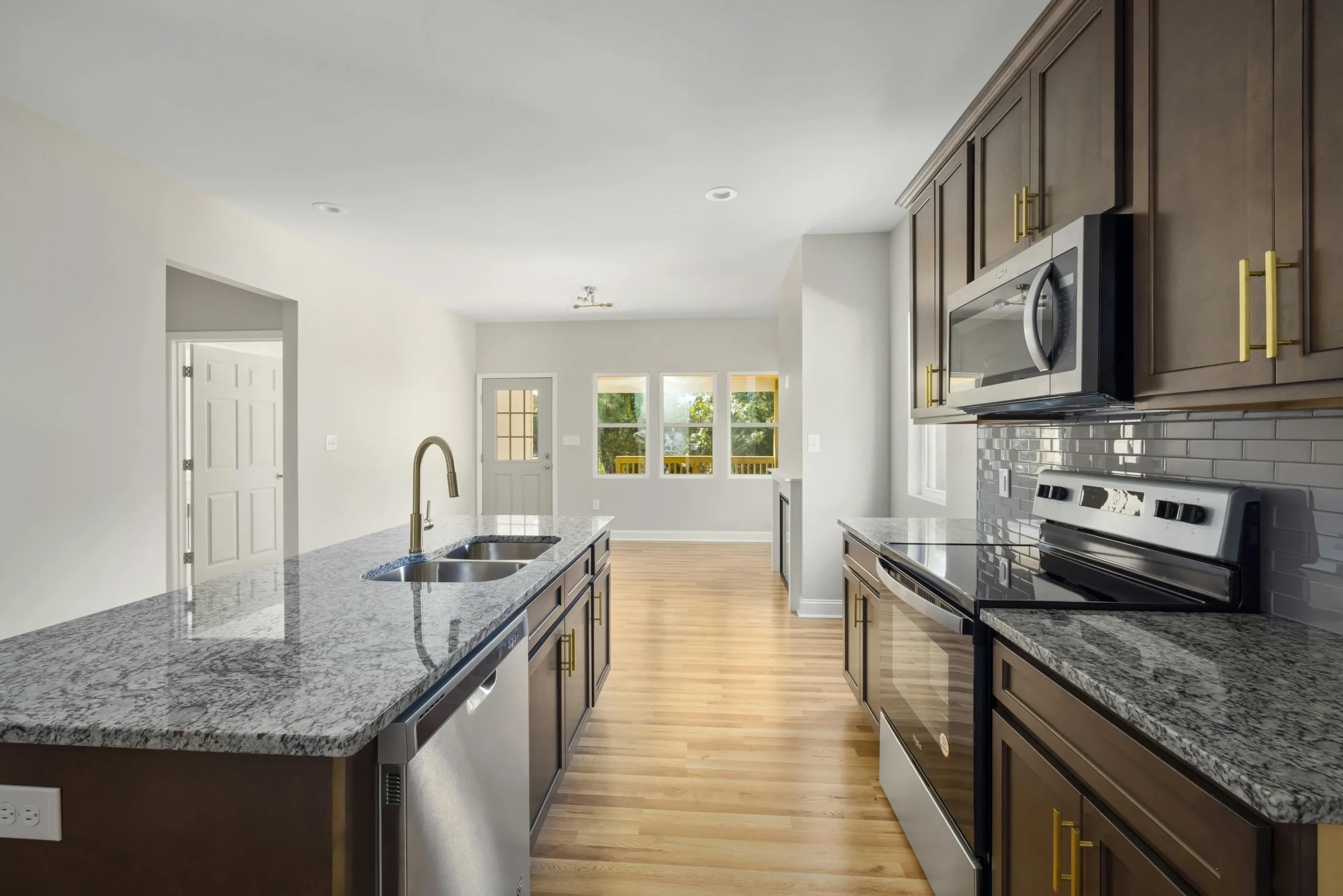

Most homeowners assume raising a home’s appeal to buyers requires an expensive renovation and weeks of disruption. Real estate data tells a more modest, but genuinely useful, story: small cosmetic updates measurably affect how buyers perceive a home, even without a full remodel.
That’s the honest version of small kitchen updates before selling not a guaranteed dollar-for-dollar windfall, but a real, well-documented effect on buyer perception, offer amounts, and how fast a home sells. Here’s what the actual data says, and which updates are worth your time.
Table of Contents
What Staging Data Actually Shows
The National Association of Realtors surveys real estate agents on staging effectiveness every year, and the 2025 results are worth knowing before spending money on cosmetic updates. About 82-83% of buyers’ agents say staging makes it easier for buyers to picture themselves living in a home, and roughly 96% of realtors believe staging has at least some positive effect on a buyer’s decision.
On price specifically, the numbers are real but more modest than viral claims suggest: roughly 19-29% of sellers’ agents report staging led to a 1-5% increase in offer amount, with about 10% reporting a larger 6-10% bump. On a $350,000 home, a 3% increase is about $10,500 a meaningful number, but one earned through the cumulative effect of the whole home’s presentation, not a single $200 hardware swap in isolation.
Where the data is more consistently strong is time on market. Staged homes are reported to sell noticeably faster some industry sources cite up to 73% less time on market which matters just as much financially as offer price, since a home sitting unsold longer typically means more carrying costs and, often, price reductions.
Why the Kitchen Specifically Matters
The kitchen is staged by 68% of sellers’ agents and ranks as the third most important room to buyers, behind the living room and primary bedroom, according to NAR’s data. It’s not the single most important room, contrary to what a lot of kitchen-focused advice implies, but it’s clearly in the top tier of what buyers weigh heavily.
The psychological mechanism is straightforward and well-documented in staging research: buyers form impressions quickly, and a kitchen that looks dated or neglected reads as “this will need money soon,” which can translate into lower offers or buyers mentally discounting the asking price, even if the underlying cabinets and layout are perfectly functional.
Cabinet Hardware: A Real, Affordable Update
Swapping dated cabinet knobs and pulls is a genuinely reasonable cosmetic update, and it’s realistic to do within a modest budget. Standard hardware costs $2-$10 per piece, with heavier “living finish” brass or matte black options running $5-$15 per piece. A typical kitchen has 35-45 hardware points, so a full swap at the higher end of that range can run $175-$675 depending on how many pieces and which finish you choose not exactly a flat $200, but a genuinely achievable weekend-project budget.
Design trends genuinely have shifted toward warmer, heavier-feeling finishes unlacquered brass and matte black have real, sustained popularity over the shinier chrome finishes common a decade ago. That’s a legitimate style observation, even without an invented dollar figure attached to it.
Lighting: A Well-Documented Staging Tactic
Under-cabinet LED lighting is a real, commonly used staging technique, not just a marketing claim. Dim, uneven kitchen lighting genuinely makes spaces photograph worse and feel smaller in person, both of which work against the exact buyer psychology the NAR data describes buyers forming a quick impression and needing to picture themselves in the space.
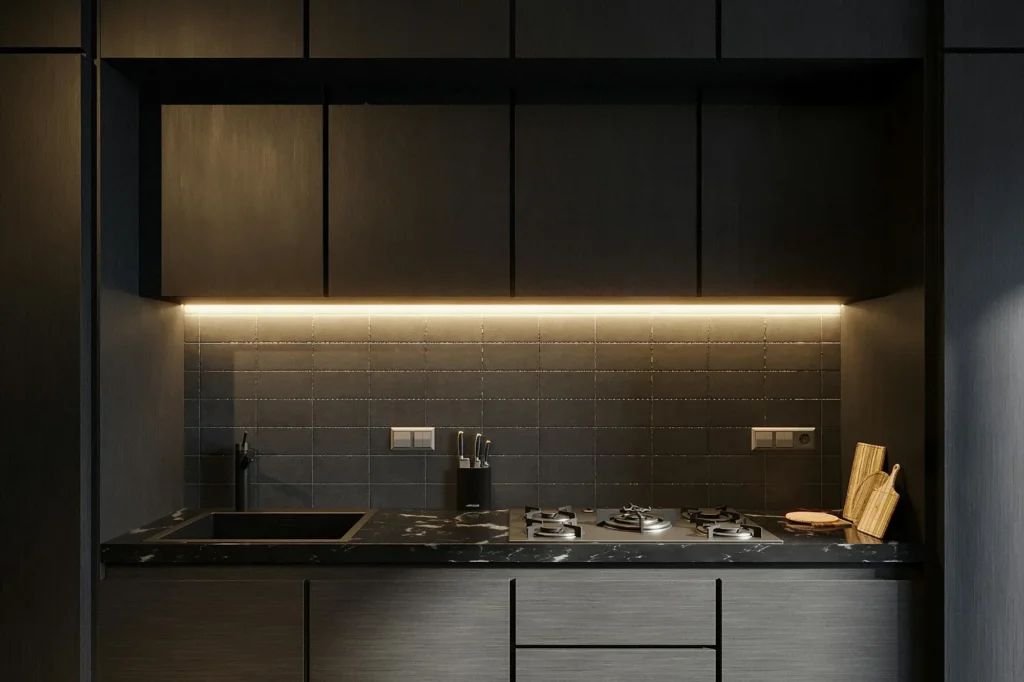
Motion-activated or plug-in LED strips are inexpensive (typically $30-$60 for a standard kitchen) and don’t require any electrical work in most cases, making this one of the lower-risk, lower-cost updates on this list.
Comparison Table: Realistic Cost and Documented Effect
| Update | Realistic Cost | What’s Actually Documented |
|---|---|---|
| Cabinet hardware swap | $175–$675 (35-45 pieces) | Contributes to overall staging effect; no isolated dollar figure exists |
| Under-cabinet LED lighting | $30–$60 | Standard staging technique for reducing perceived clutter/dimness |
| Decluttering countertops | Free | Cited specifically in NAR/staging research as a top buyer-perception factor |
| Grout/backsplash refresh | $30–$100 (DIY grout pen/cleaning) | Supports overall “well-maintained” impression buyers report responding to |
| Full staging (whole home, professional) | $400–$3,200+ depending on scope | 1-10% offer increase reported by 19-29% of agents; up to 73% faster sale reported |
| Minor kitchen remodel (cabinets refaced, counters/appliances updated) | $22,000–$35,000 | 96-113% resale ROI (Cost vs. Value Report, more substantial project) |
This table separates genuinely documented staging effects from realistic cosmetic project costs; there’s no verified source establishing a specific dollar-value return for an individual $200 spend.
Decluttering: The One Genuinely Free, Well-Documented Tactic
If there’s one tactic in staging research that’s both free and consistently backed by data, it’s decluttering. NAR-cited research consistently identifies clutter as one of the clearest negative factors in buyer perception, and clearing countertops costs nothing beyond the effort involved.
A kitchen with an empty counter reads as more spacious than the same kitchen with a toaster, blender, and mail pile sitting out this is one of the more reliably documented findings in staging research, not a marketing claim.
A Reasonable Way to Think About the Investment
It’s worth being honest about what cosmetic updates can and can’t do. They don’t fix a genuinely dysfunctional layout, outdated plumbing, or cabinets that are falling apart buyers and their inspectors will still find those issues regardless of how nice the hardware looks. What cosmetic updates do well is remove the small, easily-fixed signals that make an otherwise sound kitchen look neglected.
That distinction matters for budgeting. If your kitchen’s core bones (cabinets, layout, appliances) are structurally fine and just look tired, the cosmetic route hardware, lighting, decluttering, a grout refresh is a genuinely cost-effective way to remove buyer friction before listing. If the kitchen has real functional problems, spending on cosmetics first is likely to disappoint, since buyers and inspectors tend to notice the underlying issues regardless of how the surface looks.
Timing Cosmetic Updates Around Your Listing
One detail that often gets missed: cosmetic updates lose most of their value if done too far ahead of listing, since daily use re-introduces the exact wear and clutter you were trying to eliminate. Staging research consistently emphasizes timing updates close to when photos and showings actually happen, rather than months in advance.
A practical sequence many agents recommend: handle any structural or maintenance issues first, then do cosmetic updates in the final weeks before listing, and do the free decluttering pass the week of your first photos and showings, since that’s the point where the effect is freshest for both the camera and in-person buyers.
Frequently Asked Questions
There’s no verified, isolated dollar figure for hardware alone that specific claim (like “$5,000 for $200”) isn’t supported by real estate or appraisal data. What is documented is that overall kitchen presentation and staging, including small cosmetic details like hardware, contributes to the broader 1-10% offer increase that NAR-surveyed agents report for staged homes generally.
Based on NAR’s 2025 data, yes for most sellers 96% of surveyed realtors believe staging has a positive effect, and staged homes are reported to sell notably faster, which offsets ongoing carrying costs even when the price increase itself is modest.
Estimates vary by source and scope, generally $400 for a single consultation up to $2,300-$3,200 or more for full-home staging, with costs also commonly cited as roughly 1-3% of the home’s asking price.
Decluttering countertops, since it’s free and specifically identified in staging research as a clear factor in buyer perception. Cabinet hardware and lighting updates are the next tier, both achievable for a few hundred dollars.
It depends on the kitchen’s condition. If cabinets and layout are structurally fine but look dated, cosmetic updates (hardware, lighting, decluttering) are the more cost-effective choice. If cabinets are damaged or the layout is genuinely dysfunctional, a minor remodel (96-113% documented ROI) is likely the better investment.
The Bottom Line
Small kitchen updates genuinely do help with how buyers perceive a home that part of the original idea holds up. What doesn’t hold up is treating a $200 hardware swap as if it comes with a guaranteed, specific dollar return; real staging data shows a more modest but still meaningful 1-10% offer increase tied to overall home presentation, not an isolated cosmetic swap. Decluttering, hardware, and lighting are all reasonable, low-cost updates worth doing before a sale just go in with realistic expectations about what they’ll actually return.
SOURCES
- National Association of Realtors : “2025 Profile of Home Staging”
- National Association of Realtors (via Realty News Report) : “Home staging insights from NAR survey”
- The Zebra : “Home Staging Statistics in 2026”
- RubyHome : “Home Staging Statistics (2026)”
- Home Staging Institute : “Home Staging Statistics (2025-2026 Update)”
DISCLAIMER (appended to every PeakGuard Home article)
PeakGuard Home provides general guidance on home and solar improvement topics based on research and publicly available information. This content is intended for informational purposes only and should not be treated as professional advice. Costs, products, and recommendations may vary based on your location, home, and local codes. Always consult a licensed contractor, electrician, or solar professional before making improvement decisions or starting any project.