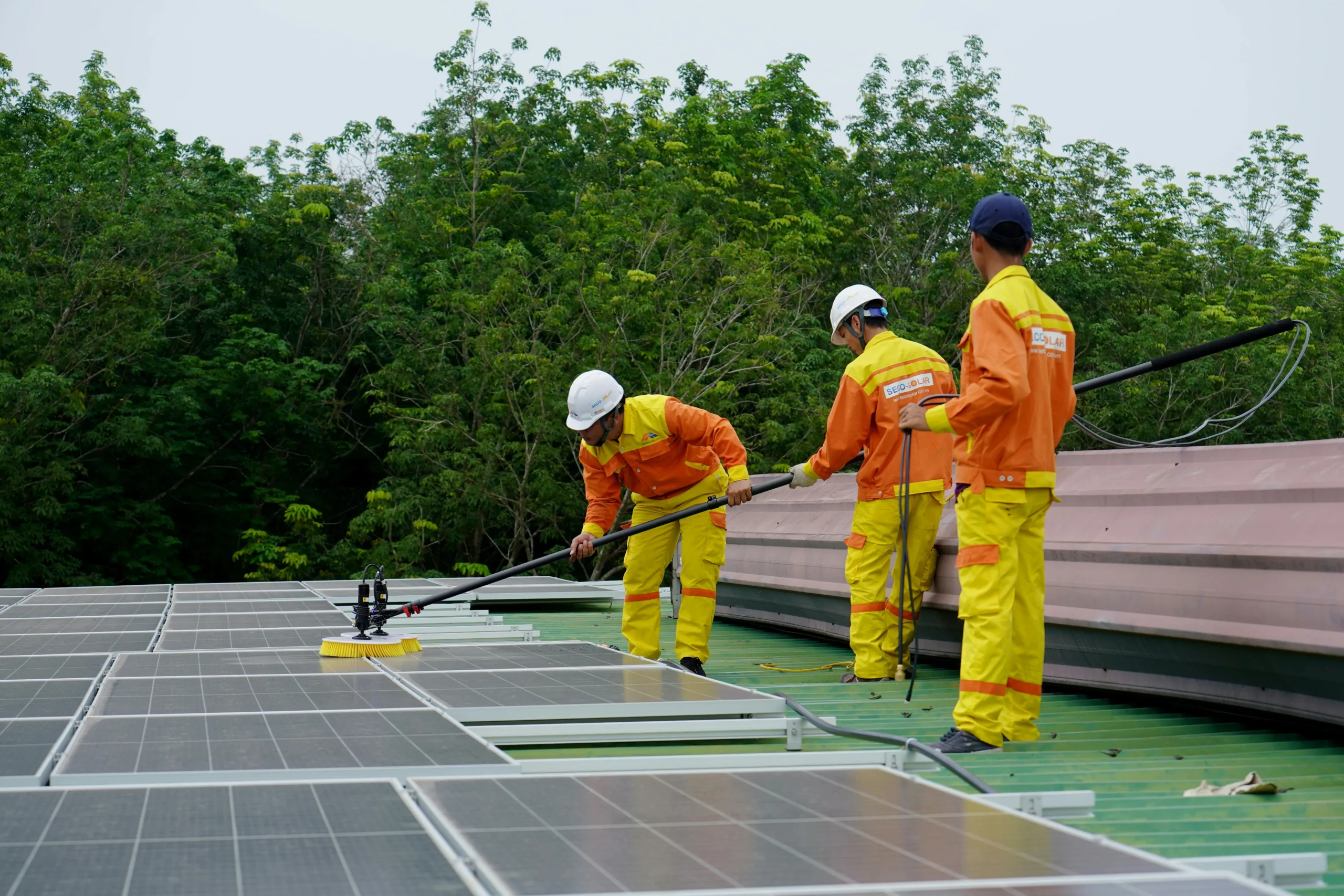

Your solar panels sit on your roof, exposed to dust, pollen, bird droppings, and leaves every single day. Left alone, that buildup quietly cuts into your energy production but the cleaning process itself carries its own risk if you get it wrong.
That’s the real tension behind the safest ways to clean rooftop solar panels: the panels themselves are fairly forgiving to clean gently, but the roof underneath them is not a forgiving place to be careless. Falls from ladders and roofs are consistently cited as one of the leading causes of injury for anyone doing this kind of work, according to OSHA’s own safety data on the construction industry broadly.
Here are the four safest methods, ranked from simplest to most hands-off, along with the safety standards that actually back them up.
Table of Contents
1. Garden Hose With Low Pressure (Ground-Level Only)
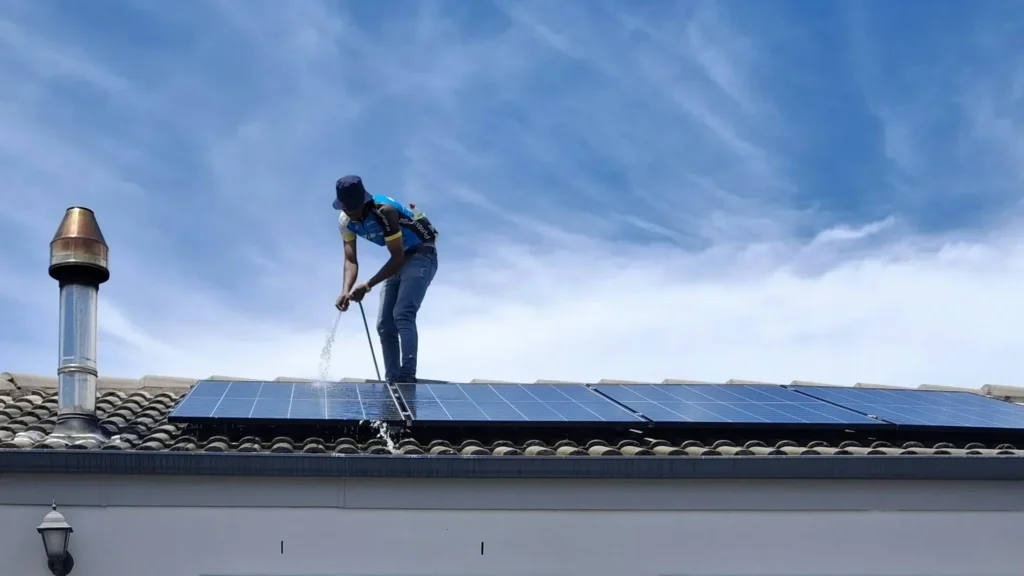
The safest version of this method is also the simplest: a standard garden hose, used from the ground whenever your roof pitch and layout allow it.
Gentle water pressure rinses away light dust and pollen without risking the glass surface. Avoid high-pressure attachments or pressure washers entirely. The water pressure can crack panel glass or force water into seals and electrical connections that were never designed to handle it.
Timing matters more than most homeowners realize. Early morning, when panels are cool and not generating peak power, is the safest window. Cleaning during peak heat can cause sudden temperature shifts between the hot glass and cool water, which creates thermal stress that’s genuinely a factor in glass cracking.
Why This Only Counts as “Safest” From the Ground
If reaching your panels with a hose requires climbing onto the roof, this method stops being the safe option. Cal/OSHA’s official working-at-height guidance explicitly places ladder use as a last resort, to be used only after ground-based tools and long-reach equipment have been ruled out. The hose itself is safe; climbing onto a pitched roof to use it often isn’t.
2. Soft Brush With a Long Handle
For dirt that a hose rinse doesn’t fully remove light bird droppings, caked-on dust a soft, non-abrasive brush on a long handle is the next safest step, and it still keeps most homeowners on the ground.
Stick to genuinely soft bristles. Stiff or metal brushes can scratch the protective coating on the glass, and that damage is permanent, a scratched panel doesn’t clean better next time, it just collects dirt faster in the scratched areas going forward.
A long-handled brush extends your reach from an upstairs window, a ladder positioned safely on stable ground, or in some cases entirely from the ground for single-story homes. The less time spent actually on the roof, the safer this method stays.
3. Water-Fed Pole System
This is where DIY solar cleaning starts to genuinely match what professionals use, and it’s the method safety guidance most consistently recommends over climbing.
A water-fed pole system uses purified or deionized water pushed through an extendable pole, letting you clean panels from the ground even on a two-story home. Because the water is purified, it dries without leaving mineral spots behind a real problem with regular tap water in hard-water regions, where hose-rinsed panels can end up with a light film that blocks about as much sunlight as the dirt did.
Internal Link: Dirty Solar Panels Increase Electric Bill: 5 Shocking Facts
Why This Method Aligns With Actual Safety Standards
Cal/OSHA’s working-at-height risk hierarchy specifically names ground-based, long-reach tools as the preferred method before considering rooftop access at all. A water-fed pole is essentially the homeowner version of that professional standard you get the cleaning result without ever leaving solid ground.
4. Professional Solar Cleaning Service
For steep roofs, multi-story homes, or large solar arrays, hiring a professional is the safest option by a wide margin, not just the most convenient one.
Professional crews working at height are expected to follow OSHA’s general industry fall-protection standard, which requires protection typically a guardrail or personal fall-arrest system for any maintenance work exposed to a 4-foot fall or greater. That’s a formal safety requirement, not a suggestion, and it’s the exact protection a homeowner on a ladder typically doesn’t have.
Professional cleaning costs $150 to $500 per visit nationally in 2026, with most single-story homes landing around $200–$350. That’s a real cost, but it buys something specific: trained access to your roof, plus an inspection for cracks or hidden damage that most homeowners wouldn’t catch on their own.
Cleaning Methods to Avoid
| Method | Why It’s Risky |
|---|---|
| Pressure washers | Can crack panel glass or force water into seals |
| Abrasive scrubbers or metal brushes | Permanently scratch the protective glass coating |
| Harsh chemicals or solvents | Can void manufacturer warranties; unnecessary for most dirt |
| Walking directly on panels | Can crack solar cells beneath the glass |
| Midday cleaning in peak heat | Creates thermal stress from rapid temperature change |
| Climbing without a spotter or fall protection | Ladders are a leading cause of injury in this type of work |
Ladder Safety, If You Do Need One
If your setup genuinely requires a ladder say, to position a water-fed pole correctly basic ladder safety still matters even if you’re not climbing onto the roof itself.
Standard guidance calls for a 75-degree angle: for every 4 feet of height, the base of the ladder should sit 1 foot away from the structure. Having a second person present as a spotter is also standard practice, and it’s a rule that costs nothing but genuinely reduces risk.
Best Time and Frequency to Clean
Early morning remains the safest window across nearly all sources, since panels are cool and sunlight intensity is lower. Most homeowners clean two to four times a year, though this varies significantly by region.
Spring pollen and fall leaf debris are the two seasonal spikes most homeowners notice. Desert regions with frequent dust storms often need more frequent cleaning, sometimes closer to monthly during dry, windy stretches.
Before You Clean: Turn Off the System
Regardless of which method you use, shutting down your solar system before cleaning is standard practice, following your manufacturer’s specific instructions. If you’re not fully comfortable with that step or with rooftop access in general, that’s a reasonable point to hand the job to a licensed solar maintenance company instead this isn’t a project where “good enough” DIY judgment is worth the risk.
Frequently Asked Questions
The four safest methods, in order of how much roof access they require, are: a ground-level garden hose with low pressure, a long-handled soft brush, a water-fed pole system operated from the ground, and hiring a professional cleaning service for steep or hard-to-reach roofs.
For single-story homes with easy, gentle-slope roof access, ground-based methods like a hose or water-fed pole are generally safe. For steep roofs, multi-story homes, or if you’re not fully comfortable with ladder use, a professional service is the safer choice given how consistently falls are cited as a leading injury risk in this type of work.
Most homeowners clean two to four times a year. Dry, dusty, or high-pollen regions often need more frequent cleaning, while areas with regular rainfall may need less.
Not automatically. Most manufacturers don’t require professional cleaning, but many do exclude damage from abrasive tools or harsh chemical cleaners. Mild soap and water, or plain water alone, is typically safe.
Early morning, when panels are cool and not generating peak power. Midday cleaning during peak heat risks thermal stress from the sudden temperature change between hot glass and cool water.
Nationally, professional cleaning runs about $150 to $500 per visit in 2026, with most single-story homes paying $200–$350.
Dirt itself typically doesn’t damage the system it primarily reduces output, sometimes by 5% to 30% depending on how dirty the panels are and local conditions. However, improper cleaning attempts (pressure washers, walking on panels, abrasive tools) can cause real physical damage that dirt alone wouldn’t.
The Bottom Line
The safest ways to clean rooftop solar panels all share one thing in common: they minimize actual time spent on the roof. A garden hose, a long-handled brush, or a water-fed pole system can handle most routine cleaning entirely from the ground, and for anything beyond that steep roofs, large arrays, or any situation where you’re not confident on a ladder a professional service is worth the cost. Check your panel’s cleaning frequency against your local pollen and dust patterns, and when in doubt, choose the method that keeps you off the roof.
SOURCES
- OSHA : “Green Job Hazards – Solar Energy: Falls“
- TravelPowerPro : “Solar Panel Safety: The Complete Guide for Homeowners & Travelers (2026)“
- ISCA : “Solar Panel Cleaning Safety in California: Essential Guidelines,” citing Cal/OSHA
- Cutting Edge Window Cleaning Services : “What safety precautions should I take when cleaning solar panels in 2025?”
- SolarCleanHub : “Cost to Clean Solar Panels: 2026 Pricing Guide“
DISCLAIMER
PeakGuard Home provides general guidance on home and solar improvement topics based on research and publicly available information. This content is intended for informational purposes only and should not be treated as professional advice. Costs, products, and recommendations may vary based on your location, home, and local codes. Always consult a licensed contractor, electrician, or solar professional before making improvement decisions or starting any project.